
Life at Sharp Park Detention Center
and
Its Haiku Circle
Overview of Sharp Park Detention Station
Nestled just south of San Francisco, the Sharp Park Detention Station represents a lesser-known yet significant chapter in American history. During World War II, this facility detained individuals from Japanese, German, and Italian communities who were deemed threats, or potential threats, to national security. Among the detainees were prominent community figures, including teachers in Japanese-language schools and journalists from Italian-language newspapers. Despite its historical significance, particularly to the Bay Area, Sharp Park, and the lives of those detained there, have been minimally explored.
Landscape near the site of the former Sharp Park Detention Station, Pacifica, California. Photography by Kay Ueda.
Landscape near the site of the former Sharp Park Detention Station, Pacifica, California. Photography by Kay Ueda.
Sharp Park was distinct from the War Relocation Authority (WRA) camps, which are more widely recognized for incarcerating Japanese and Japanese Americans. It was part of the “enemy alien” program managed by the Army and the Immigration and Naturalization Service (INS), encompassing a total of 19 camps across locations like Crystal City in Texas, Ellis Island in New York, and Fort Missoula in Montana. Following the attack on Pearl Harbor on December 7, 1941, President Roosevelt’s Presidential Proclamations 2525, 2526, and 2527 led to the arrest of thousands from the Japanese, German, and Italian communities by the FBI and other law enforcement agencies, often on dubious or unverified accusations. Over the course of the war, these camps detained 16,849 Japanese, 10,905 Germans, and 3,278 Italians, along with smaller numbers of Hungarians, Bulgarians, Romanians, and other European nationals. Additionally, more than fifteen Latin American countries took up the US government’s offer to incarcerate allegedly dangerous citizens of Axis powers living in these countries. As a result, more than 6,600 individuals were sent to the US and detained at these facilities, often to be used in exchanges for American civilians held in enemy territories. The Sharp Park Japanese detainee population peaked at 379 by July 14, 1942.
Sharp Park Detention Station, Pacifica, California. Circa 1941-1942. Bancroft Library, University of California, Berkley. See the copyright status below. Reimaging pending.
Sharp Park Detention Station, Pacifica, California. Circa 1941-1942. Bancroft Library, University of California, Berkley. See the copyright status below. Reimaging pending.
San Mateo map showing the location of Sharp Park. War Department Corps of Engineers. U.S. Army. USGS.
San Mateo map showing the location of Sharp Park. War Department Corps of Engineers. U.S. Army. USGS.
For Japanese individuals, the consequences of the enemy alien program were particularly daunting due to existing immigration policies that barred them from becoming U.S. citizens, despite the fact that many had contributed to the American society and economy for decades. In addition, the Japanese community was more culturally and linguistically isolated from the American community at large, with limited interactions with white Americans, which raised suspicion in the eyes of US authorities. As a result, US authorities did not distinguish between long-term residents of the US and recent expatriates sent from Japan, and Sharp Park housed a mix of both kinds of detainees.
Dorothea Lange (1895–1965). This image is available from the United States Library of Congress's Prints and Photographs division under the digital ID cph.3a24566.
Dorothea Lange (1895–1965). This image is available from the United States Library of Congress's Prints and Photographs division under the digital ID cph.3a24566.
The time Japanese detainees spent at Sharp Park was relatively short, primarily spanning from 1942 to 1943, yet it was a period filled with significant hardships. This article delves into these critical months, underscoring the initial challenges faced by the detainees. These included frequent relocations between detention facilities, the lack of clarity in the procedures for exchanges and repatriation, and the emotional distress caused by detainees’ separation from their families. These elements combined to create a profound sense of uncertainty and anxiety during the early stages of their wartime experience.
Recent discoveries from the JAHA collection, particularly documents related to Aiso Henry Takahashi, are casting new light on detainee experiences within Sharp Park.
Takahashi, an Issei man from Menlo Park and a former president of the Japanese Association in Palo Alto, was deeply involved in local Japanese haiku circles. The unearthed records reveal the vibrant cultural life at the detention station, highlighted by a thriving haiku circle that exemplifies the detainees’ resilience and enduring spirit.
"Master Takahashi Composing Haiku Intensely", Aiso Takahashi papers, June 25, 1942. JAHA Collection
"Master Takahashi Composing Haiku Intensely", Aiso Takahashi papers, June 25, 1942. JAHA Collection
"Being Named Judge, Completing A Piece about Koi and Attitude toward Critiquing Haiku選者をといふ名を付けられて 鯉の一句を成すまで 句を見る時の態度" Takahashi Hyotei 高橋萍汀 (Aiso Takahashi), June 27, 1942. JAHA Collection. The presence of the INS "Examined" stamp and address written on this paper suggests it was mailed out from Shark Park.
"Being Named Judge, Completing A Piece about Koi and Attitude toward Critiquing Haiku選者をといふ名を付けられて 鯉の一句を成すまで 句を見る時の態度" Takahashi Hyotei 高橋萍汀 (Aiso Takahashi), June 27, 1942. JAHA Collection. The presence of the INS "Examined" stamp and address written on this paper suggests it was mailed out from Shark Park.
Daily Life and Interactions
The diaries written by Yamato Ichihashi, a historian at Stanford University, stand out in the scantly documented annals of Sharp Park. As one of the few Japanese professors at any US university before WWII, his academic achievements were exceptional at a time when such accomplishments were rare for the Japanese in America. Ichihashi’s diaries, written during his time at various detention and incarceration facilities, including Sharp Park, provide a rare and valuable perspective. He documents his transfer from Santa Anita Assembly Center to Tule Lake camp and eventually to Sharp Park in late August 1942, before his subsequent return to Tule Lake on October 26 of the same year. His writings reveal that the number of detainees at Sharp Park never exceeded 500, comprising not only Japanese, but also Germans, Italians, and “Internationals,” typically immigration cases. The restrictive conditions at Sharp Park were such that Ichihashi felt “relieved” upon returning to Tule Lake.
In addition to Ichihashi’s account of the mixed-race Sharp Park camp, Aiso Takahashi provides a more intimate observation of a bedbug disinfection day, when all the detainees had to leave their quarters and come outside.
About two weeks ago, a powerful and potent disinfection was conducted for the extermination of bedbugs, covering all the buildings in the facility, including the barracks, of course, as well as the dining hall and laundry areas. It was primarily our fellow countrymen who were the first to be defeated by the onslaught of the bedbugs. It was the result of our demands to the authorities that the day of disinfection finally arrived. After breakfast, all the white and Japanese people were led to the designated rest area around the assembly hall building in the northwest corner of the premises. We managed with sandwiches and oranges for lunch, passing the day idly….
This day provided an opportunity for Japanese detainees to interact with Italians and Germans at Sharp Park.
Today, as well, with every window and every gap sealed, the people of our Barrack 2 gathered at the usual spot, bringing their go boards, magazines, books, writing materials, and hand-held baskets.
Outside the buildings, four hundred detainees from about twenty different countries overflowed. On the south side, the baseball field is lively, with a robust match between a team of middle-aged Japanese and a similar group of white players.
On the north side of the building, facing a deep creek, a narrow open space utilized old tables and decayed benches well for those engrossed in playing go with a click-clack sound. I don’t know how they arranged it, but some cautious people were also seen preparing to boil coffee during the lunch break.

“A Day Outside the Barrack” (舎外の一日), page 1, dated July 14, 1942, #1031 Sharp Park Alien Camp, Calif, H. Aiso Takahashi
“A Day Outside the Barrack” (舎外の一日), page 1, dated July 14, 1942, #1031 Sharp Park Alien Camp, Calif, H. Aiso Takahashi

“A Day Outside the Barrack” (舎外の一日), page 2, dated July 14, 1942, #1031 Sharp Park Alien Camp, Calif, H. Aiso Takahashi
“A Day Outside the Barrack” (舎外の一日), page 2, dated July 14, 1942, #1031 Sharp Park Alien Camp, Calif, H. Aiso Takahashi

“A Day Outside the Barrack” (舎外の一日), page 3, dated July 14, 1942, #1031 Sharp Park Alien Camp, Calif, H. Aiso Takahashi
“A Day Outside the Barrack” (舎外の一日), page 3, dated July 14, 1942, #1031 Sharp Park Alien Camp, Calif, H. Aiso Takahashi

“A Day Outside the Barrack” (舎外の一日), page 4, dated July 14, 1942, #1031 Sharp Park Alien Camp, Calif, H. Aiso Takahashi
“A Day Outside the Barrack” (舎外の一日), page 4, dated July 14, 1942, #1031 Sharp Park Alien Camp, Calif, H. Aiso Takahashi

Germans, Italians, and Japanese detainees
During the disinfection days, a unique scene unfolded that brought together Germans, Italians, and Japanese detainees, providing them a rare chance to interact outside their usual routines. Takahashi describes encountering an Italian man who had taken the opportunity to nap casually along the perimeter fence. Upon waking, the Italian man, with a smile, lit a rationed Durham cigarette—a simple gesture that underscored the shared circumstances of the detainees.
Takahashi also recounted the vibrant activity in the assembly hall, where detainees from different national backgrounds gathered. The hall was bustling with energy, crowded with card players who were deeply preoccupied with their games and surrounded by onlookers.
[Takahashi] entered the assembly hall and observed the general scene. A white man, impressively transcending the crowded space, lay long on a bench with a cap over his face, napping. The hall was indeed full of people. Around a large round table, amidst many foreigners, there was just one Japanese man engaged in playing cards with them. The thick circle of onlookers around them was astonishing. On the other side, there was also a group engrossed in a purely Japanese-style card game of hanafuda. The relaxed spectators were as usual. Despite the hall being so crowded, it was remarkably quiet, seemingly each person comfortably settled in their own space.
While incarcerated at Sharp Park, some Japanese and Italian detainees sought to maintain a semblance of normalcy amidst the constraints of their confinement.
Among them was Kotoharu Inouye, a chrysanthemum grower from Redwood City. Inoue took on a leadership role within the camp, channeling his expertise in agriculture by spearheading an effort to grow vegetables, thereby providing both a necessary diversion and a source of sustenance for the detainees. In addition to his agricultural contributions, Inoue also founded a haiku circle at Sharp Park.
Starting from the wire mesh fence and extending westward towards the sea, several acres of vegetable gardens have been cultivated. Today, too, the group led by Inoue, the head of agriculture, is silently showing their dedication by diligently watering the vegetables. Beyond these fields, though not visible from here, lies the Pacific Ocean with its waves crashing against the shore.
Koharu Inouye papers, Hoover Institution Library & Archives. Kotoharu Inouye Playing Go at the Santa Fe DOJ Camp—courtesy of the Inouye family.
Koharu Inouye papers, Hoover Institution Library & Archives. Kotoharu Inouye Playing Go at the Santa Fe DOJ Camp—courtesy of the Inouye family.
Sharp Park Detention Center, circa 1941-1942.
Pacifica, California.
While the haiku circle provided a brief distraction, the detainees were never free of anxieties over their future uncertainties. On a disinfection day, Takahashi overheard conversations among his fellow Japanese detainees about the serious topics of prisoner exchanges with American civilians in enemy territories and repatriation processes. From Sharp Park onwards, the trajectories of Japanese Issei varied, although none were straightforward; some were transferred to other camps under the War Relocation Authority (WRA) and the Department of Justice, and others were eventually placed on exchange ships bound for Japan. Complex diplomatic negotiations, the capacities of the exchange ships, individual requests, family situations, and, of course, the US authorities’ judgment on the detainees all contributed to this diversity of experiences, highlighting the complex impacts of internment on the lives of Japanese detainees during World War II.
Anxieties Over Their Future
Ibuki Hibi by her mother, Hisako Hibi, in Hayward, California, before their transport to the Tanforan Assembly Center on May 9, 1942. Dorothea Lange, National Archives. Courtesy of the Hibi Estate.
Ibuki Hibi by her mother, Hisako Hibi, in Hayward, California, before their transport to the Tanforan Assembly Center on May 9, 1942. Dorothea Lange, National Archives. Courtesy of the Hibi Estate.
[Japanese-American boarding up store front before evacuation, San Francisco]. Library of Congress Prints and Photographs Division Washington, D.C. 20540 USA dcu https://lccn.loc.gov/2001705940
[Japanese-American boarding up store front before evacuation, San Francisco]. Library of Congress Prints and Photographs Division Washington, D.C. 20540 USA dcu https://lccn.loc.gov/2001705940
The Cultural Activities
and
Haiku Circle at Sharp Park
A Temporary Respite From The Anxieties Of War
Haiku in Japanese America
By Tsukioka Yoshitoshi - Ukiyo-e.org , Tokyo Metropolitan Art Museum https://ukiyo-e.org/image/metro/5233-060-092, Public Domain, https://commons.wikimedia.org/w/index.php?curid=95375491
By Tsukioka Yoshitoshi - Ukiyo-e.org , Tokyo Metropolitan Art Museum https://ukiyo-e.org/image/metro/5233-060-092, Public Domain, https://commons.wikimedia.org/w/index.php?curid=95375491
Tanforan Assembly Center, Karl Bendetsen papers, Hoover Archives
Tanforan Assembly Center, Karl Bendetsen papers, Hoover Archives
While this story focuses on haiku as a window into life at Sharp Park, to set the scene, it is worth exploring haiku's historical role in poetry networks in Japan. A precursor to modern haiku, linked verses known as haikai no renga, became widely popular by the second half of the 18th century. This poetic form spread rapidly throughout towns and villages in Japan.
The haiku networks that emerged among the Issei detainees at Sharp Park merited from the inherent structure of haiku circles, or lack thereof. These networks often transcended traditional boundaries and had a horizontal structure that discouraged rigid categorical identities, fostering a sense of community among the members. Communication within these circles was frequent. Haiku circles were created spontaneously, resulting in an ephemeral and fluid forum well-adapted to the temporary and shifting circumstances of the Sharp Park Detention Station. Moreover, adopting poet names within these circles allowed the members to create an alternative reality.
Amidst their isolation from their families and a lack of comfort in their daily lives, some Japanese detainees sought solace through the creation of a haiku circle.
Many Japanese detainees had families who were temporarily held at the Tanforan Assembly Center in San Bruno, a facility repurposed from a former racetrack (Figure 7 of Tanforan). For these detainees, correspondence with their loved ones provided rare moments of solace and happiness amidst the hardships of their confinement. This was especially true for Takahashi, who felt a much-awaited sense of relief upon receiving news that his third daughter had successfully undergone appendix surgery and was recovering well. Such communications served as vital emotional lifelines, linking detainees to their families and the world beyond the barbed wire. The detainees' haiku frequently captured the profound longing for family, reflecting their emotional landscape during this tumultuous period.
Sharp Park Haiku Circle Begins
The first meeting of this circle was held on the evening of May 20, 1942. Takahashi, an invitee to this gathering, was named the judge. Takahashi’s recollection of this first meeting appears as follows.
The motivation behind the birth of the Sharp Park Haiku Circle was largely due to the wartime detainment at Sharp Park… We were separated from our families, and strict communication control and other regulations were enforced. The internees lived a life devoid of any comfort, similar to that of prisoners. Seeking solace somewhere, they eventually turned to haiku as a way to pass the time. It seems that people who had little experience with haiku, who only read them in passing in newspapers and magazines, can momentarily forget their internment mood and enjoy a kind of entertainment. Thus, the circle was formed unexpectedly.
Mr. Muka [Etsu] Koike, dispatched from the Tokyo City government and returned to Japan on the second exchange ship with Mr. [Kodai] Motoyoshi of the Yokohama Specie Bank, stayed in the same barrack as I did. Mr. Koike, who had previously had no interest in such matters, was inspired by letters from fellow internees at other assembly centers, which often included tanka and haiku, and he said that these poems added a touch of poetic charm. He asked me to review his tanka and haiku drafts. Since he had almost no previous interest in this field, I took the liberty of adding my thoughts to his works. At some point, he gathered four or five people and suggested we create a haiku together, insisting I join. I accepted his invitation, thinking that I would discuss his letter replies. When I attended, I was greatly surprised to see about thirty people, including newspaper journalists, religious ministers, Japanese language school teachers, and others.
Mr Shutei [Kotoharu] Inoue, known for his leadership within the camp community, stood up and announced the establishment of the Sharp Park Haiku Circle. He introduced me as its judge without advance notice. Despite feeling unqualified for the role, I couldn't refuse outright because of my relationship with Mr. Koike.
"Selected as an Evaluator", page 1, Aiso Takahashi Papers, JAHA Collection
"Selected as an Evaluator", page 1, Aiso Takahashi Papers, JAHA Collection
"Selected as an Evaluator", page 2. Aiso Takahashi Papers, JAHA Collection
"Selected as an Evaluator", page 2. Aiso Takahashi Papers, JAHA Collection
"Selected as an Evaluator", page 3, Aiso Takahashi Papers, JAHA Collection
"Selected as an Evaluator", page 3, Aiso Takahashi Papers, JAHA Collection
A Temporary Respite From The Anxieties Of War
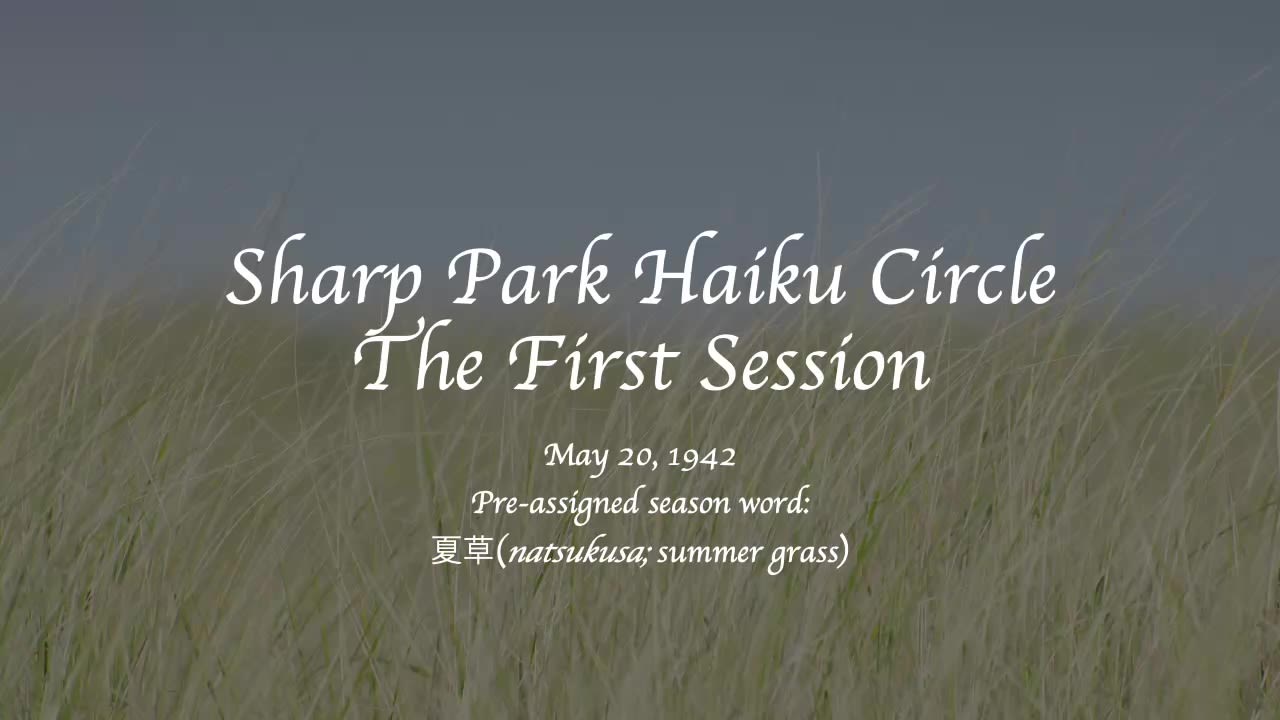
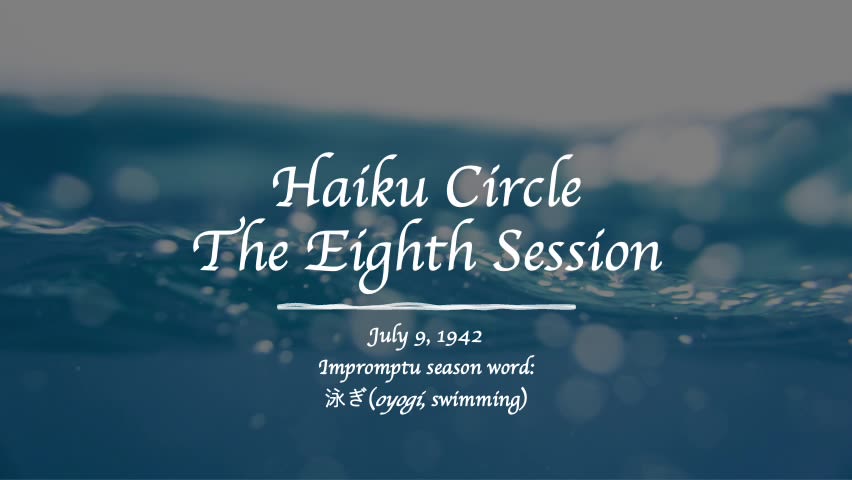
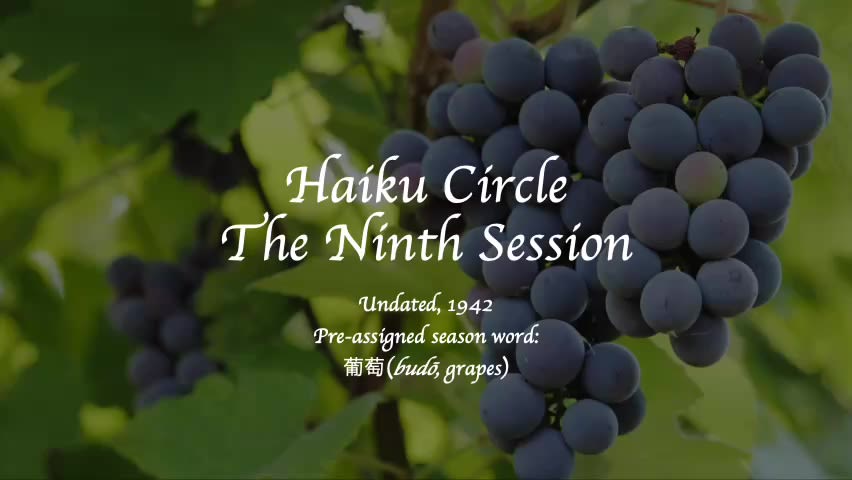
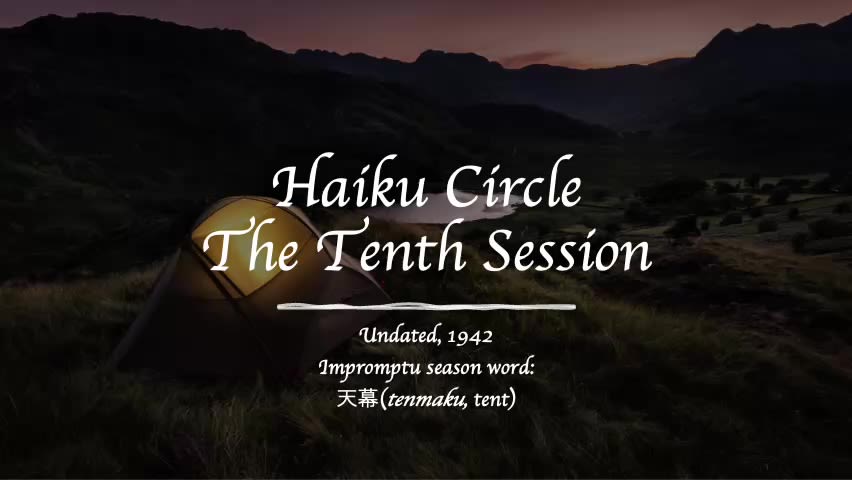
The haiku circle at Sharp Park served as a poignant form of resistance against the harsh realities of wartime internment. Initially formed to provide an emotional and creative outlet, the circle allowed its members to focus their compositions on nature and their distant families, offering a temporary respite from the anxieties of war. The themes of tranquility and peace within their haiku became a vital source of comfort for the detainees, navigating a period rife with challenges and uncertainties. The Aiso Takahashi papers, housed in the JAHA collection, preserve documentation from ten haiku meetings convened at Sharp Park, including the lists of haiku composed by participants and the critiques that followed. The haiku circle commenced with 30 haiku from 25 contributors in its inaugural meeting, using the seasonal word “natsugusa” (summer grass). By the fifth meeting, participation peaked with 199 haiku from 34 contributors, featuring “koi” (carp) as the seasonal word. However, by the tenth meeting, contributions had dwindled to just seven, illustrating the transient existence of the haiku circle at Sharp Park, which lasted only from late May to the end of July 1942.
Despite the ephemeral nature of this circle, Takahashi, a leading figure within the group, continued to nurture the haiku tradition beyond Sharp Park. He carried this poetic practice to the Topaz camp and later the Tule Lake Segregation Center, maintaining a thread of cultural continuity and resilience through poetry.
Comprising 916 haiku in total, the Takahashi papers provide a vivid record of the Sharp Park gatherings. Presented here is a selection of the poems most highly valued by Takahashi in each session. Because the haiku circle sought to offer a temporary refuge from wartime anxieties through contemplation of nature and landscape—and because the detainees were under strict surveillance by the authorities—relatively few haiku directly reveal the realities of detention or the inner sentiments of the participants.
Explore haiku composed in each session. Click on the assigned season words.
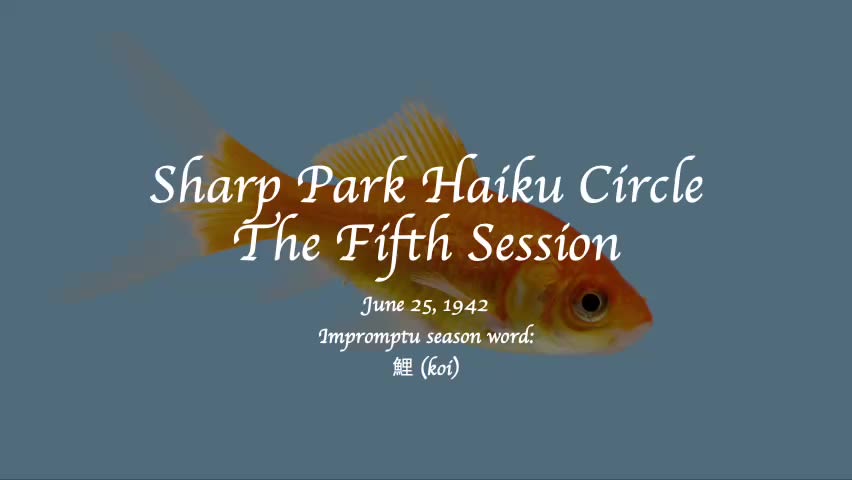
Members of the Sharp Park Haiku Circle
Takahashi’s documentation of the Sharp Park Haiku Circle members provides invaluable insights into the backgrounds of these individuals and the possible reasons that they were suspected as dangerous by FBI officers during World War II. The profiles of the members highlight their affiliations with various organizations under scrutiny by the FBI for promoting pro-Japan activities. These individuals were primarily Buddhist church ministers, teachers at Japanese-language schools, priests from the Konkyo and Tenrikyo religions, prominent figures within the Japanese Association, and members of the Hokubei Butokukai (North American Virtue Society), a kendo organization aimed at training Nisei in martial arts and teaching them Japanese.
These organizations drew the FBI’s scrutiny and suspicion because their activities were conducted primarily in Japanese and were exclusive to Japanese and Japanese Americans. However, the precise nature of the activities deemed pro-Japan remains somewhat unclear. Reports in Japanese American newspapers from 1938 to 1940 indicate that some individuals made donations to the Japanese Army or to Japanese soldiers conscripted from their hometowns—actions that were likely viewed by U.S. authorities as supportive of the Japanese government’s militaristic agenda.
The members of the Haiku Circle from Barrack No. 6 at Sharp Park not only engaged in poetic pursuits but also played significant roles within their detainee community. A detailed report from the Nichi Bei Shinbun,dated April 22, 1942, reveals the intricacies of this microcosm of organized activity. Led by Kodai Motoyoshi, who before the war had served as vice chairman of the Japanese Association as well as San Francisco branch manager of the Yokohama Specie Bank, Barrack No. 6 exemplified structured community leadership even under detention..
Responsibilities within the barracks were clearly delineated: Kokugi Inouye handled mail, Toyokichi Setoguchi, Masayoshi Kuranaga, and Gisei Maeda managed security, Yuichi Hosoda was in charge of supplies, Etsu Koike coordinated sports, Shigeru Nagata and Shigehiko Nagata took care of communication, and Shigeru Nagata and Fukuzo Nakahara ran the library.
Writing is a medium of communication that represents language through the inscription of signs and symbols.
In most languages, writing is a complement to speech or spoken language. Writing is not a language but a form of technology. Within a language system, writing relies on many of the same structures as speech, such as vocabulary, grammar and semantics, with the added dependency of a system of signs or symbols, usually in the form of a formal alphabet. The result of writing is generally called text, and the recipient of text is called a reader. Motivations for writing include publication, storytelling, correspondence and diary. Writing has been instrumental in keeping history, dissemination of knowledge through the media and the formation of legal systems.
Aiso Takahashi Papers, JAHA Collection
Aiso Takahashi Papers, JAHA Collection
Aiso Takahashi Papers, JAHA Collection
Aiso Takahashi Papers, JAHA Collection
Find out more about some of the haiku circle members.
The Japanese pen name, Rosui (蘆水), or Naozumi Momose, was an active haiku poet in Valley Ginsha and an executive of the Hokubei Butokukai (North American Martial Virtue Society) in Fresno. He also became a prolific haiku poet at Sharp Park.
山越せば山越せばタンフーランや雲の峰
If I could cross the hills, I'd see Tanforan and cloudy peaks.
Hideo Mochizuki 望月秀雄 changed his pen name from Matera to Pure Reflection or Seisha 清泻 in Japanese. He was the Mochizuki Store owner in Madera, California.
兄弟や葡萄を摘む日は敵同士
Brothers—on the day we pick grapes, we are enemies.
The pen name, Shuseki 酒石 or Tartar, refers to a substance that forms during the fermentation of sake. Chuzo Yamane 山根忠蔵 was the second president of the Delano Japanese Association.
曇り勝ち配所の昼寝夢多し
Cloudy days prevail, dreams abound in detention’s nap
Yasukichi Yasumura 安村安吉 was a Konkokyo minister in Sacramento. He chose his pen name, Plum Village or Baison 梅村 in Japanese.
昼寝してタンフラーンを訪れぬ
Napping, I paid a visit to Tanforan
Shigehiko Nagaoka 長岡重彦's pen name was Silver Grass Snow or Bōsetsu 芒雪 in Japanese. He was an executive of the Central California Federation of Hokubei Butokukai (North American Martial Virtue Society) and the Japanese Association in Fresno.
寄るべなき身は浮草のツルーレーキ
A restless body, floating grass at Tule Lake
Conclusion
Newly rediscovered documents from the Takahashi papers in the JAHA collection have illuminated the daily lives of detainees at Sharp Park, revealing the profound anxieties stemming from being labeled “enemy aliens.” These documents provide insight into how detainees, separated from their families and thrust into an environment of suspicion and isolation, coped with their early experiences of WWII. The Haiku Circle at Sharp Park Detention Center stands as a poignant reflection of the experiences faced by the first-generation Issei and expatriate Japanese detainees during World War II. This facility was not just a detention center; it was a focal point for individuals impacted directly by restrictive immigration policies that barred Issei from becoming U.S. citizens due to racial prejudices. Consequently, they became “enemy aliens” overnight after the Japanese attack on Pearl Harbor. This, coupled with their limited interactions with white Americans and their cultural and linguistic isolation, heightened suspicions from the US authorities.
Creating and sharing haiku within this context provided a vital outlet for expressing the deep anxieties of incarceration and the struggle for identity amidst the sweeping tides of war and national security concerns. Through these poetic forms, detainees articulated both resilience and a heightened sense of displacement, highlighting the enduring human spirit in the face of intense adversity.
Mellon Foundation
Special thanks to the Middlebury College Service Translation and the International Christian University Team for their volunteer translation service of selected Sharp Park haiku.
Middlebury College Service Translation Team and International Christian University Team Members at the site of the former Sharp Park Detention Station, Pacifica, CA.
Middlebury College Service Translation Team and International Christian University Team Members at the site of the former Sharp Park Detention Station, Pacifica, CA.
Writing is a medium of communication that represents language through the inscription of signs and symbols.
In most languages, writing is a complement to speech or spoken language. Writing is not a language but a form of technology. Within a language system, writing relies on many of the same structures as speech, such as vocabulary, grammar and semantics, with the added dependency of a system of signs or symbols, usually in the form of a formal alphabet. The result of writing is generally called text, and the recipient of text is called a reader. Motivations for writing include publication, storytelling, correspondence and diary. Writing has been instrumental in keeping history, dissemination of knowledge through the media and the formation of legal systems.
 Built with Shorthand